Should Youth Sports Be Free to Foster Inclusivity and Development?
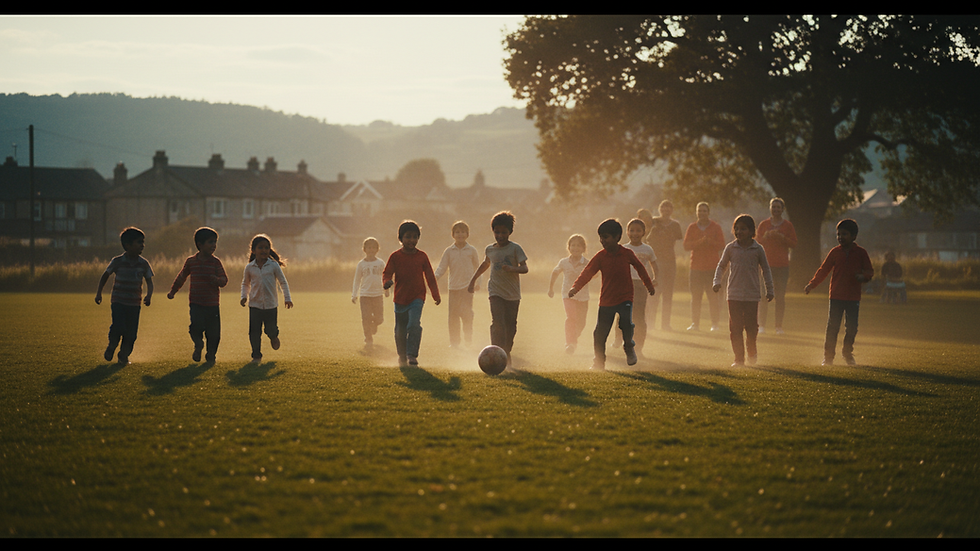
In England, children from the most affluent families are 13 percentage points more likely to meet daily activity guidelines than those from the least well-off homes. For families living through the cost-of-living crisis, 7% have already cancelled their children's sports memberships outright. More than 70% of grassroots clubs raised their fees in 2024 just to keep the lights on. The gap is growing, and the question is becoming harder to ignore: should youth sports be free?
This is not just a debate about money. It is a debate about what kind of society we want to build, who gets a fair start, and whether sport is a right or a privilege. Here are four compelling arguments on each side.
The Case For Making Youth Sports Free
1. Cost Is the Biggest Barrier to Entry
Registration fees, kit, travel, and club memberships all add up fast. When over a third of young people in community surveys say the cost-of-living crisis has directly cut into their sports participation, the financial barrier is not theoretical; it is happening right now. Children with two or more characteristics of disadvantage, such as low income combined with disability, see participation rates drop to just 40%. Free access would change the starting point for hundreds of thousands of children, giving every child the same shot regardless of their postcode or their parents' pay packet.
2. The Physical Health Benefits Are Too Big to Ignore
Sport keeps children healthy. That sounds obvious, but the scale of the problem it could solve is significant. In England today, 22.2% of children in Year 6 are living with obesity, rising to 29.3% in the most deprived areas. Inactivity is already driving rising rates of Type 2 diabetes, anxiety, and musculoskeletal problems in children. Every £1 invested in community sport generates more than £4 for the economy, partly through NHS cost savings. Funding free youth sports is not just a social policy. It is one of the smartest public health investments available.
3. Sport Builds the Soft Skills That Shape Adults
Active children are measurably different from their inactive peers. They score higher on mental wellbeing, with active children averaging 7.1 out of 10 compared to 6.7 for less active children. Boys who play sport regularly face a 35% lower risk of depression and a 21% lower risk of anxiety for every additional weekly hour of physical activity. And 84% of pupils in targeted sport programmes report feeling more confident as a result. Teamwork, resilience, and the ability to lose gracefully are not soft extras. They are life skills. Right now, they are mostly available to children whose families can afford them.
4. Shared Pitches Build Bonds That Shape Life Chances
Sport is one of the few environments where children from very different backgrounds play side by side and build real relationships. Research consistently shows that cross-class friendships formed in childhood are among the strongest predictors of upward social mobility. When sport sits behind a fee barrier, those bonds never form. Free access creates shared spaces where children from different neighbourhoods and different circumstances compete, cooperate, and grow together. That social infrastructure has value that goes well beyond the final whistle.
The Case Against Making Youth Sports Free
1. Public Funding Comes With Real Trade-offs
Every pound spent subsidising sport is a pound not spent on schools, hospitals, or housing. The UK government has already cut the annual PE and School Sport Premium by 40%, dropping from £320 million to under £200 million per year, while internal Whitehall disputes have stalled further commitments. Critics argue that in a period of tight public finances, broad subsidies for sport are harder to justify than targeted spending on more urgent needs, particularly when the communities that most need support are often least able to reach free facilities due to transport costs or irregular working hours.
2. Free Programmes Risk Lower Quality
Families who pay for private clubs do so because those clubs offer structured coaching, development pathways, and competitive standards that publicly funded programmes have historically struggled to match. When quality drops, families with the means to do so simply opt out, leaving only those without alternatives behind. A free programme that loses qualified coaches to budget constraints and fails to develop young talent may ultimately serve no one well. The goal is not just access. It is access to something worth showing up for.
3. Subsidies Do Not Always Reach Those Who Need Them
There is a persistent problem with publicly funded leisure programmes in the UK: they are most often used by people who need them least. Families with cars, flexible schedules, and knowledge of what is available are far better placed to take advantage of free facilities. Without deliberate, targeted delivery, free youth sports programmes risk becoming a subsidy for middle-class participation while the most disadvantaged children, those in Newham or Tower Hamlets where inactivity rates already run above 32%, remain as excluded as before.
4. Hidden Long-Term Costs Can Burden Communities
Free at point of entry does not mean free to run. Pitches need maintenance. Sports halls need staffing. Kit wears out. Infrastructure costs grow with inflation, and the government's own record shows how quickly political will wavers. The Primary PE and Sport Premium, once a cornerstone of school sport funding, has already been scaled back. Without a sustainable, ring-fenced funding model, free youth sports programmes risk becoming a short-term promise with a long-term bill that local councils and overstretched schools are left to pick up.
Where I Stand
The evidence points in one direction. The participation gap between the most and least affluent children has held stubbornly at 13 percentage points, and while overall activity levels have edged up, progress for the least affluent has stalled entirely. Grassroots clubs are raising fees. Government funding is being cut. And 2.1 million children in England still do less than 30 minutes of physical activity a day.
I believe youth sports should be free, or at least free at the point of access for every child who wants to participate. Not elite academies or competitive travel squads, but foundational community sport: the kind that builds fitness, friendships, and character. The kind that every child deserves a shot at, regardless of what their parents earn or which borough they happen to grow up in.
The public health savings alone make a strong economic case. Every pound invested in sport returns more than £3.91 in social benefits. The moral case is just as clear. And the growing inequality in who gets to play makes it urgent.
But the harder question is this: even if we agree that sport should be free, are we willing to fund it properly, deliver it fairly, and make sure the children in Newham and Tower Hamlets benefit just as much as those in Richmond? That is where the real debate begins. And it is worth having.


Comments